

How to Choose the Ideal Lighting for a Basement Home Office
What’s the best lighting for a basement home office?
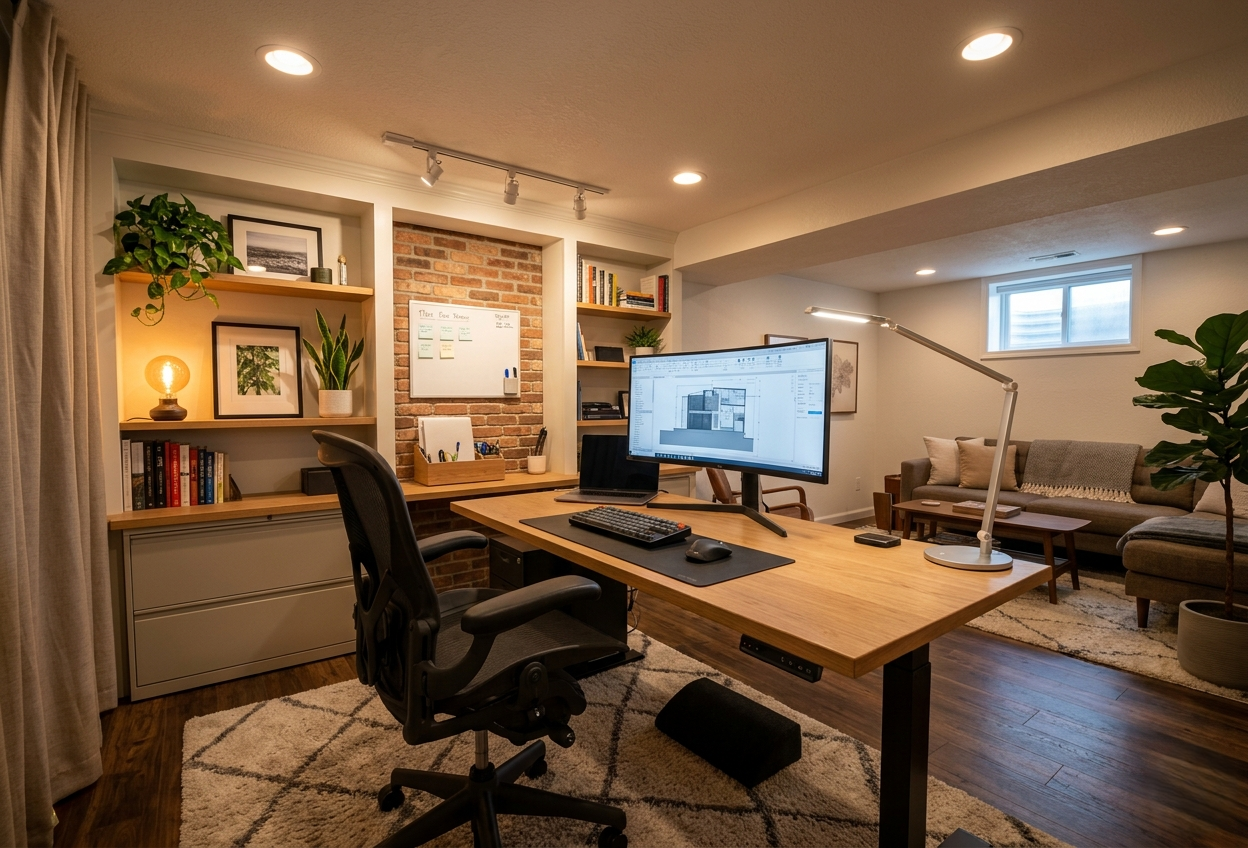
If you've ever tried working from a basement office in Grand Rapids, you know the struggle. It starts fine — you sit down with your coffee, open your laptop, and by 10 a.m. you're already squinting, yawning, or feeling oddly drained. The culprit isn't your workload. It's your lighting.
Basements don't get the natural light that the rest of your home enjoys, and Michigan winters make that problem even worse. But here's the good news: with the right lighting setup, your basement office can feel just as bright, focused, and comfortable as any above-ground workspace. You don't need a massive renovation — you just need to be strategic.
Here are the seven best lighting solutions for a basement home office, explained simply and practically.
1. Layer Your Lighting — Don't Rely on One Fixture
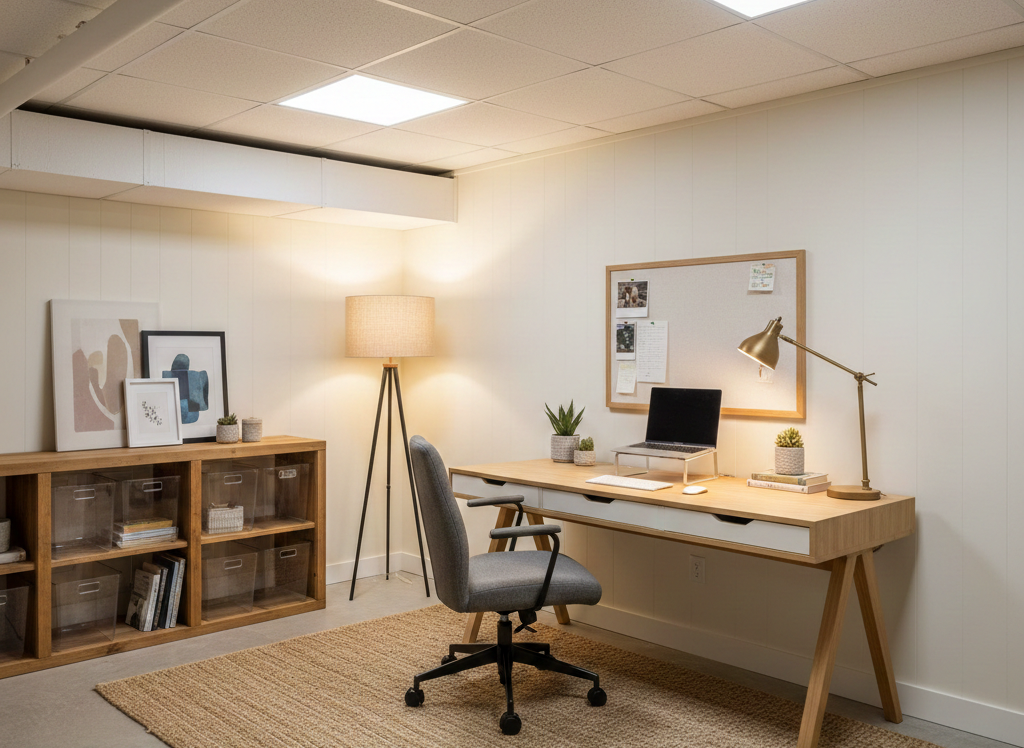
One of the most common mistakes homeowners make is relying on a single ceiling light and considering the job finished. Basement offices need three layers working together: ambient lighting (general room brightness), task lighting (focused light at your desk), and accent lighting (softer light that fills in shadows and adds depth). Think of it like cooking a dish—every layer of seasoning contributes something distinct that the others can’t achieve on their own.
2. LED Recessed Lighting for General Brightness
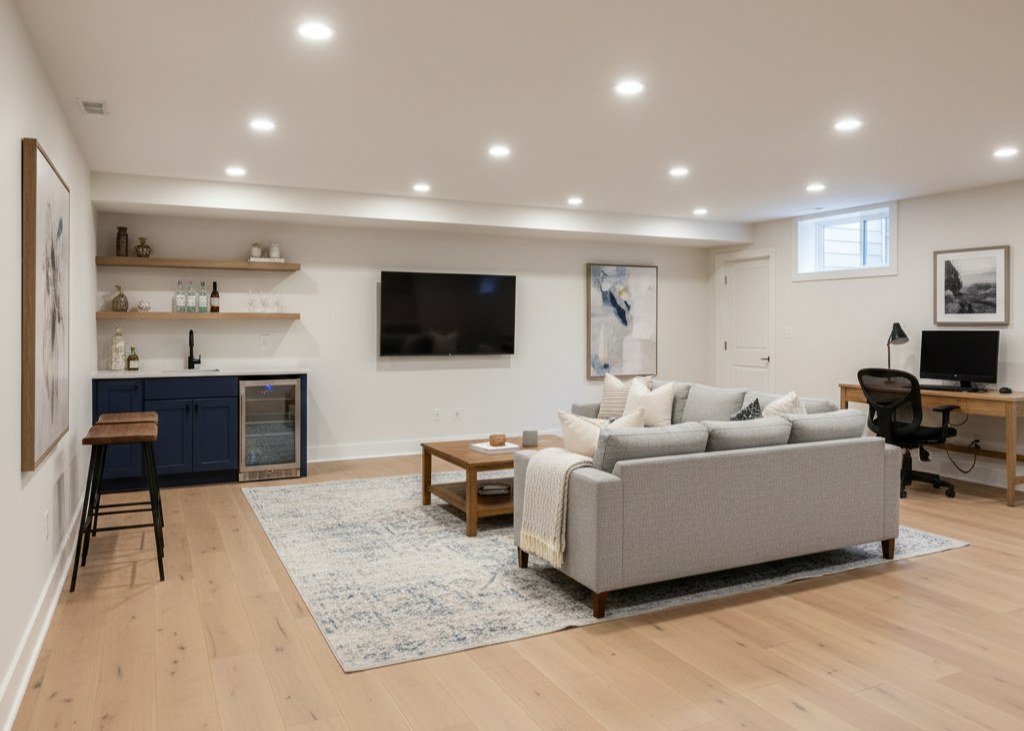
Recessed can lights are a basement office's best friend, especially in rooms with lower ceilings. They sit flush with the ceiling, spread light evenly, and don't feel intrusive. Go for dimmable LEDs rated around 4000K to 5000K — that's the cool white, alert-feeling range. Space them roughly one fixture per 25 to 30 square feet, and you'll have solid, even coverage without any dark corners dragging your energy down.
3. A Good Desk Lamp Is Non-Negotiable
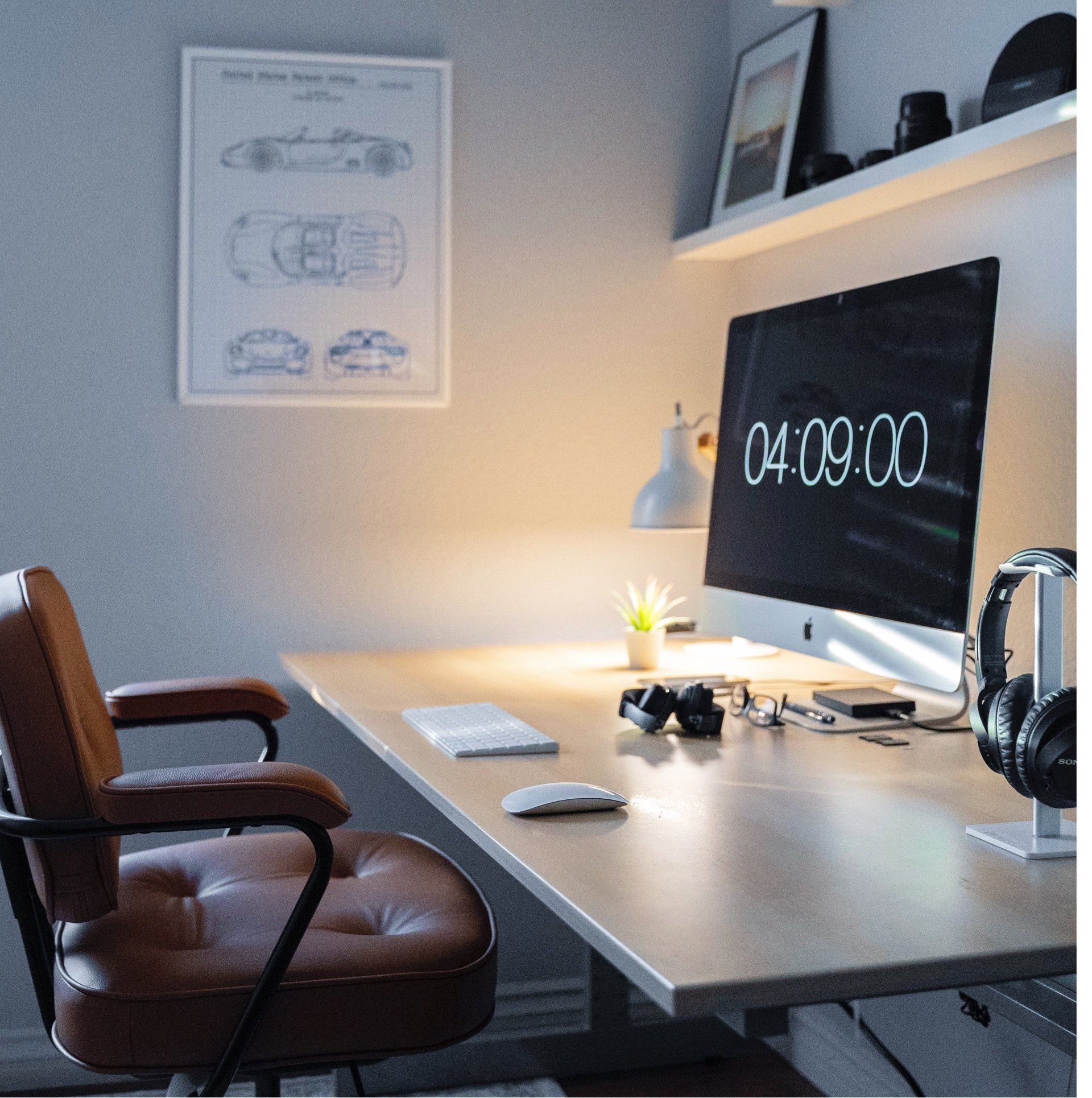
Overhead lighting doesn't cut it on its own when you're reading documents, writing, or staring at a screen for hours. A quality desk lamp positioned to the side of your monitor — not directly above or behind it — reduces eye strain significantly. Aim for at least 500 lux at your work surface. Adjustable-arm lamps are ideal because you can redirect the light exactly where you need it throughout the day.
4. Use Daylight-Simulating Bulbs
Here's something most people don't think about: your body expects light to shift throughout the day. When you're stuck in a windowless basement, that doesn't happen naturally. Full-spectrum or daylight bulbs (5000K to 6500K) mimic natural sunlight and help keep your energy and mood stable — something especially worth considering in Grand Rapids, where gray skies from November through March can already take a toll. Smart lighting systems such as Philips Hue or LIFX can be set up to automatically adjust those changes for you.
5. Brighten Your Surfaces, Not Just Your Fixtures
Lighting doesn't happen in a vacuum. Dark concrete walls and deep-colored flooring absorb light instead of reflecting it, which means even great fixtures underperform. Paint your walls a light gray or white with a satin or eggshell finish to bounce light around the room. If your basement floor is bare concrete, finishing it with a light-toned epoxy coating makes a surprisingly big difference — it's one of the simplest ways to get more out of the lighting you already have.
6. Add Bias Lighting Behind Your Monitor
Bias lighting — LED strips placed behind your screen — sounds like a design gimmick, but it genuinely reduces eye fatigue. It reduces the harsh contrast between your bright display and the dimmer wall behind it. Use warm white strips (around 2700K to 3000K) to balance out the cooler overhead lights, and you'll notice your eyes feel a lot less tired by the end of day.
7. Consider a Smart Lighting System
Smart lighting systems let you set up scenes that match how you actually work. Bright and cool for focused deep work, warmer and softer for video calls, dimmed down when you're winding up at the end of the day. Once it's set up, it runs automatically — one less thing to think about during your workday.
Before the Lights Go In, Get the Foundation Right
All of this works best when your basement itself is in good shape. Unfinished concrete walls and floors don't just look rough — they actively work against your lighting by absorbing it and making the space feel heavier than it needs to.
If you're in the Grand Rapids area and your basement still has bare or aging concrete, Grand Rapids Basement Pros can help you get it ready. From epoxy floor coatings to wall finishing and egress work, they handle the groundwork that makes every other upgrade — including your lighting — actually perform the way it should. A properly finished basement reflects more light, feels cleaner, and gives you a workspace you're actually glad to spend time in.
Reach out to Grand Rapids Basement Pros today for a free consultation and take the first step toward a basement office that works as hard as you do.
The Bottom Line
Good basement lighting isn't about buying the most expensive fixtures — it's about layering the right types of light, choosing the right color temperatures, and making sure your walls and floors aren't fighting against you. Start with recessed LEDs, add a solid desk lamp, swap in daylight bulbs, and let a smart system handle the rest. Your basement office might just become your favorite room in the house.