





Basement Bathroom Plumbing in Grand Rapids: Upflush Systems vs. Gravity Drains
Why choosing the right basement plumbing system matters for your home
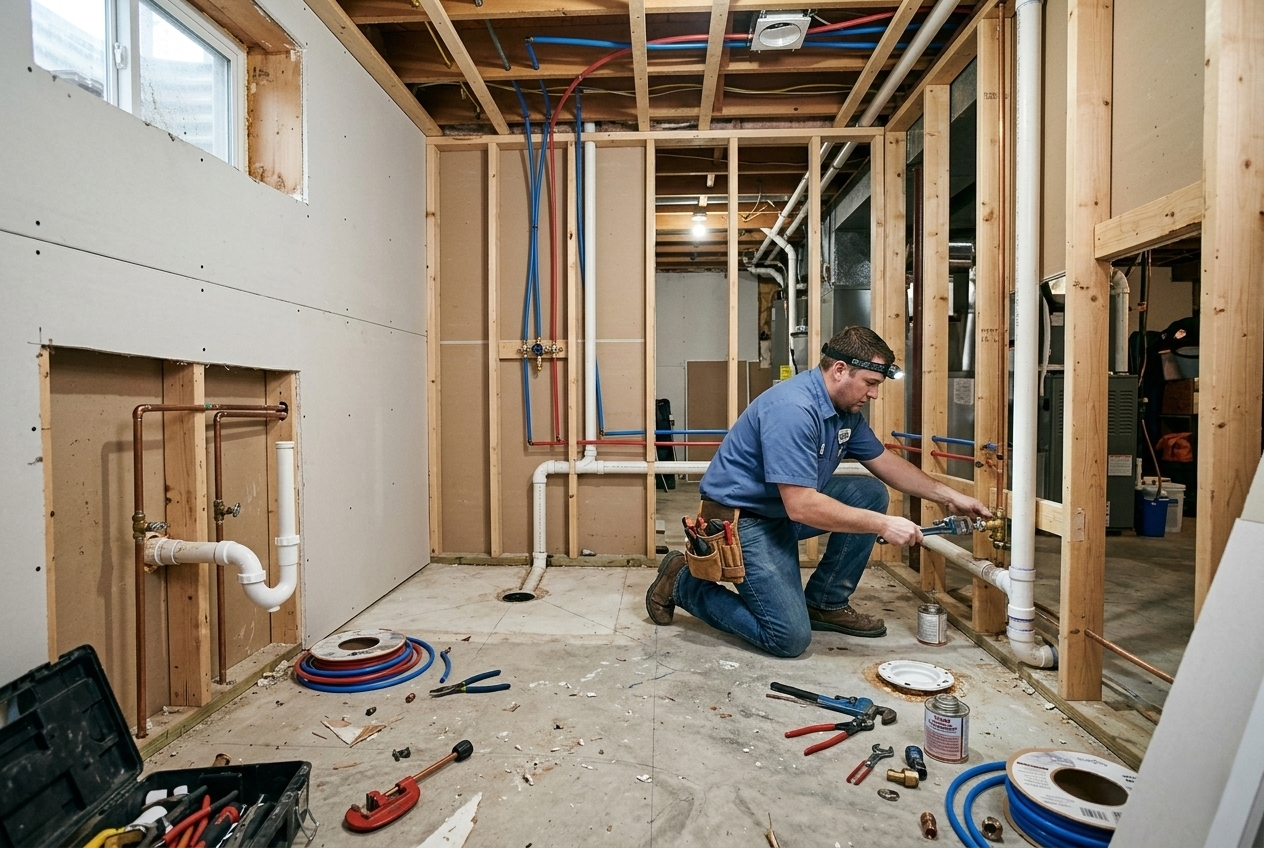
Turning your basement into a finished area is an excellent way to gain extra space and enhance your property’s worth. Whether you’re dreaming of a guest bathroom, a cozy powder room, or a full family bath, one thing often holds homeowners back: plumbing. Basements sit below the main sewer line, so standard plumbing isn’t always an option.
If you live in Grand Rapids, knowing your options early can save you a lot of time, money, and stress. Two popular solutions for basement bathrooms are upflush systems and gravity drains. Both are effective, but they function quite differently and come with distinct benefits and limitations. Let’s break it down to see which suits your home best.
Why Basement Plumbing Is Different in Grand Rapids
Basement plumbing isn’t as simple as hooking up pipes like you would on the main floor. Most basement bathrooms are below the level of the city sewer line, so waste can’t simply flow downward. Without the right system, you risk backups, leaks, and serious water damage.
Here in Grand Rapids, you also have to consider local conditions. The soil can be clay-heavy in some neighborhoods like Eastown or Creston, making excavation tricky. Winters bring frost lines that affect plumbing placement, and the city has strict building codes to ensure proper drainage and safety. Proper planning is key to successfully installing a bathroom in the basement.
Gravity Drain Systems
Gravity drain systems are the traditional approach to plumbing. Wastewater moves naturally downward through pipes to your home’s main sewer line. For a basement bathroom, that often means cutting trenches into your concrete slab to install pipes with the proper slope.
Reasons to consider them:
- Stands the test of time while staying low-maintenance.
- Reliable design that doesn’t rely on pumps or electricity.
- Consider a more permanent solution, which can be a plus if you ever sell your home.
Potential drawbacks:
- Installation is disruptive and labor-intensive, especially in finished basements.
- Upfront spending is higher, driven by material and labor costs.
- Not feasible if your basement floor is below the city sewer line without extensive excavation.
Gravity drains work best when your sewer line is accessible and the basement layout allows for a proper slope without extensive demolition.
Upflush Systems
Upflush systems, or macerating systems, are designed for situations where gravity alone can’t move waste. Wastewater enters a small holding tank, where it’s ground up by a macerator and pumped upward into your home’s sewer line.
Advantages:
- Can be installed nearly anywhere in the basement.
- Minimal disruption—no heavy concrete cutting required.
- Often more budget-friendly for smaller bathroom projects.
Things to keep in mind:
- Requires electricity and some maintenance to keep the pump running smoothly.
- You might notice a gentle noise while the system is running.
- Using it incorrectly could cause clogs or pump problems.
Upflush systems are ideal for finished basements, guest bathrooms, or situations where digging trenches for a gravity system isn’t practical.
Deciding Which System Matches Your Needs
When it comes to choosing a system, a few key points make all the difference:
- Basement Layout: Check how your sewer line compares to your
basement floor. If it’s too high, a gravity system may be impossible.
- Budget: Gravity drains often cost more upfront due to labor and materials. Upflush systems are generally cheaper to install but need ongoing maintenance.
- Bathroom Use: High-traffic full bathrooms may benefit from a gravity system, while a low-use powder room could be perfect for an upflush setup.
- Tolerance for Disruption: If you have a
finished basement with hardwood or tile, an upflush system avoids tearing up your floors.
Professional advice is invaluable here. A skilled plumber can evaluate your home, check local code requirements, and recommend the solution that’s safest and most practical.
Conclusion
Adding a basement bathroom in Grand Rapids can be transformative. Gravity drains offer durability and low maintenance for long-term reliability, while upflush systems give flexibility and less invasive installation. Choosing the best option hinges on your basement’s design, your financial plan, and the purpose you envision for the space.
If you’re ready to make your basement bathroom dream a reality,
contact Grand Rapids Basement Pros. Our team can evaluate your space, guide you through your options, handle permits, and install a system that works efficiently for years to come. Stop hesitating—your perfect basement starts with confident plumbing.