





Basement Moisture vs. Water Damage: A Guide for Grand Rapids Homeowners
How to spot basement moisture before it becomes water damage
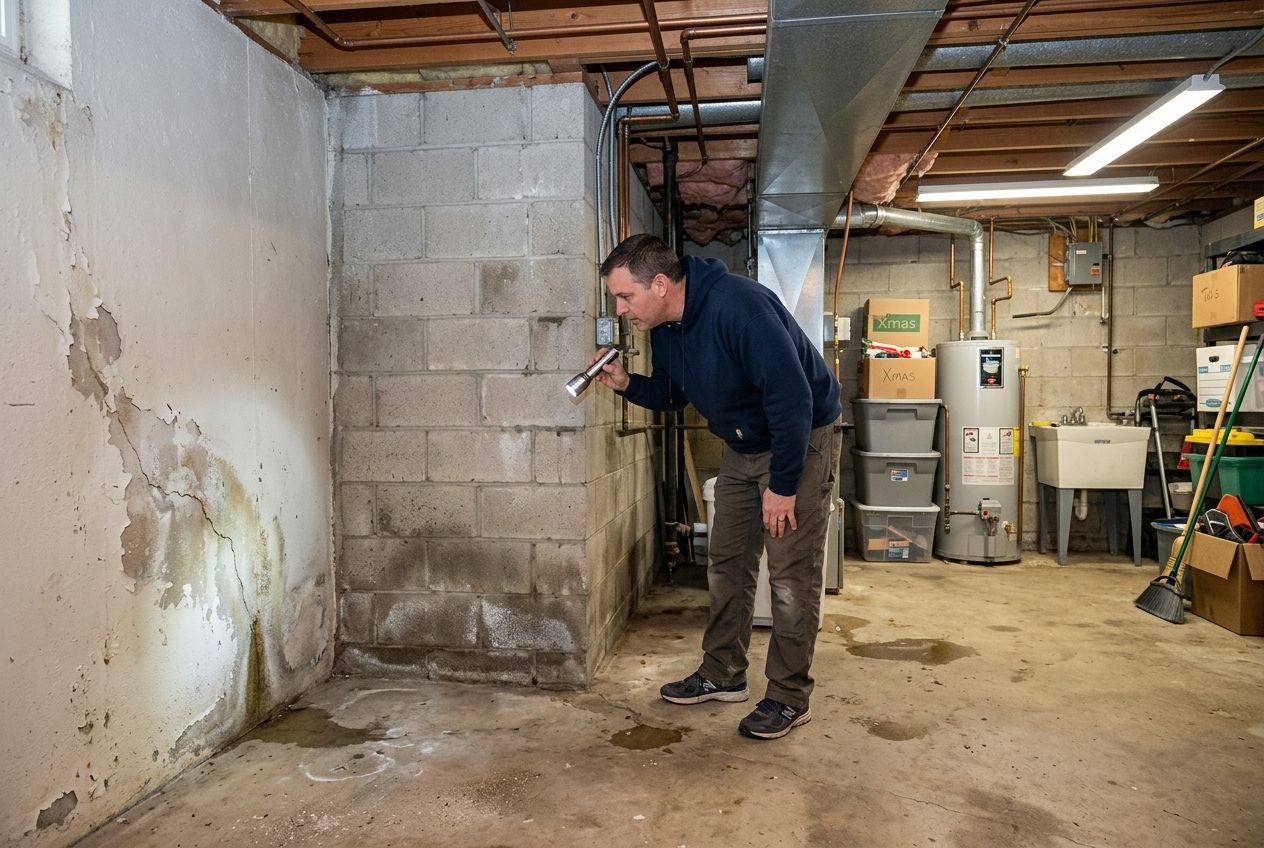
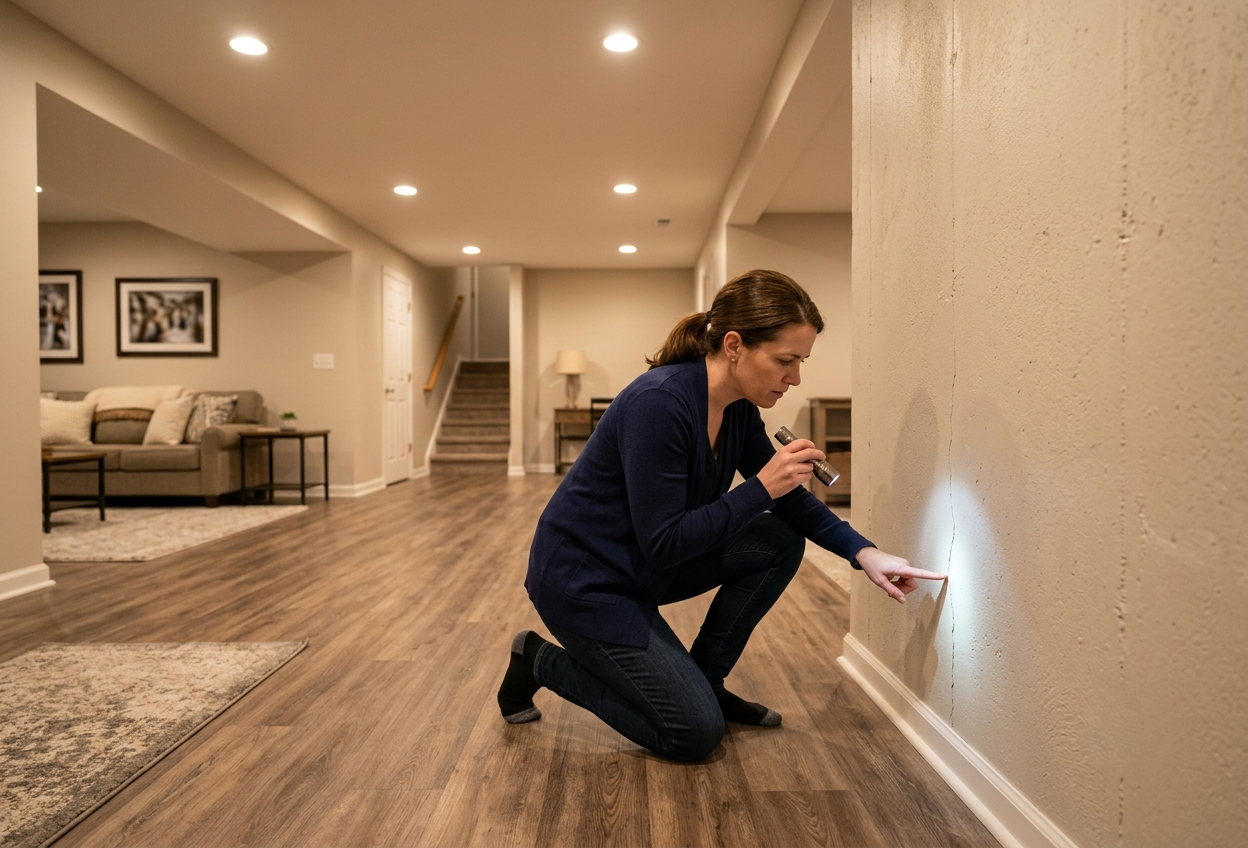
You walk downstairs and notice a musty smell. The walls feel damp. After a heavy storm, a small puddle appears in the corner. Is this normal basement moisture, or do you have water damage?
At first glance, these issues may seem almost the same, but they have different causes and require different solutions. Identifying the problem early can help you avoid bigger damage and costly repairs down the road.
The Difference in One Sentence
Basement moisture is excess dampness in the air or on surfaces. Water damage is what happens when that water starts to harm your walls, floors, and belongings.
Moisture is often the warning sign. Water damage is the result of leaving it unchecked.
Signs of Basement Moisture
- A musty or damp smell
- Condensation on windows, pipes, or walls
- Air that feels humid or clammy
- Damp spots that appear and disappear
Moisture usually comes from poor ventilation, warm humid air meeting cool concrete, or water vapor moving through the foundation from wet soil. Grand Rapids summers are humid, so condensation on basement walls and pipes is common from June through August.
Moisture is not an emergency, but it is not harmless. A basement that stays damp for weeks creates the conditions for mold, odors, and rot.
Signs of Water Damage
- Standing water or puddles that keep coming back
- Water stains or discoloration on walls
- White, chalky deposits on concrete (called efflorescence)
- Peeling, flaking, or blistered paint
- Drywall that feels soft, swollen, or warped
- Warped flooring, trim, or wood
- Visible mold growth
Water damage does not require a flood. A slow leak through a foundation crack or repeated seepage along one wall causes the same harm over time.
Why Grand Rapids Basements Are at Risk
West Michigan weather puts steady pressure on your foundation. Lake-effect snow builds up all winter, then melts in spring and soaks the ground around your home. Spring and summer storms add more water on top of that.
When the soil is saturated, hydrostatic pressure pushes water through cracks, porous concrete, and the joint where your walls meet the floor. Repeated freeze-thaw cycles can gradually worsen the problem. When moisture gets into a small crack, freezing temperatures cause it to expand, putting pressure on the concrete and making the crack wider over time.
Common problems that send water toward your foundation include:
- Clogged or overflowing gutters
- Downspouts that drain too close to the house
- Ground that directs water toward the foundation rather than away from the home
- Existing foundation cracks
- Poor or failing drainage
How to Tell Which Problem You Have
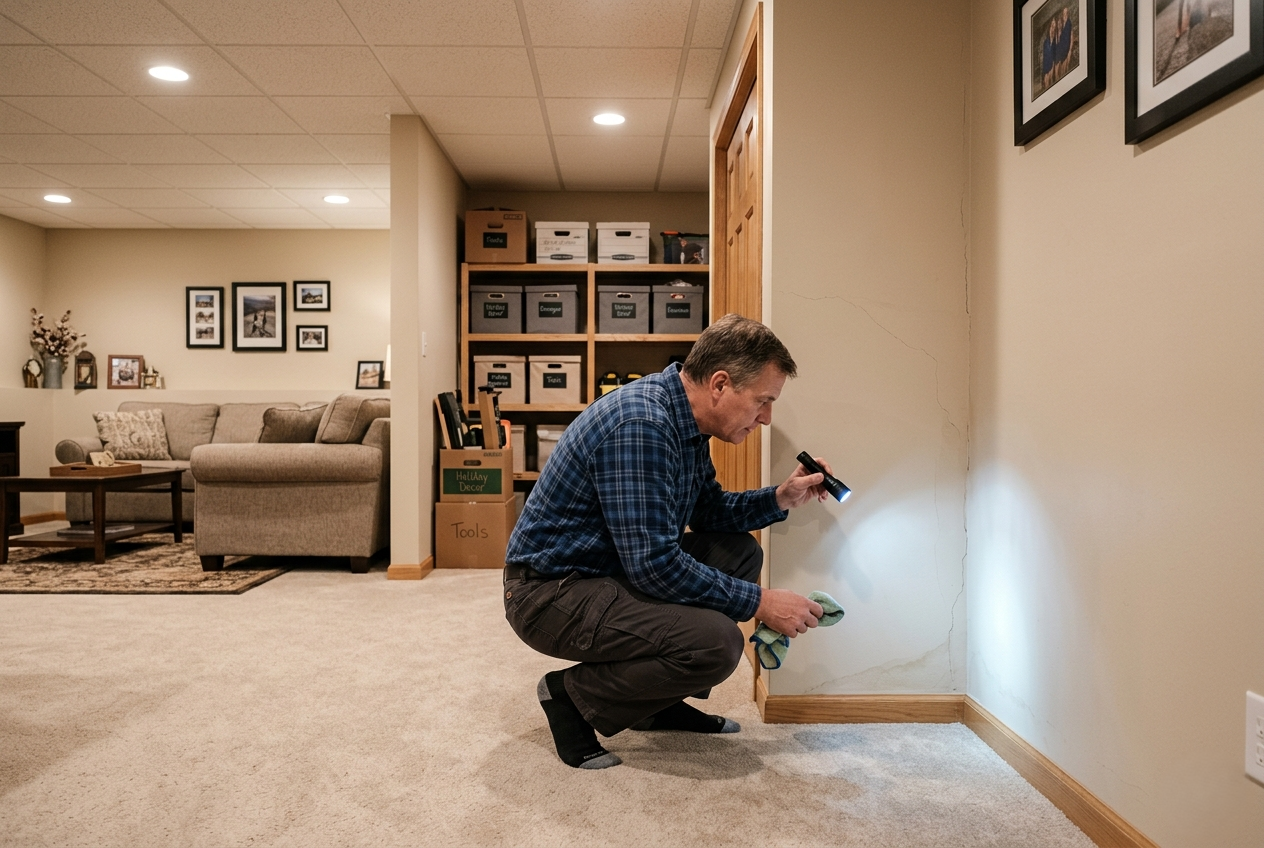
Start with a simple test. Tape a 12-inch square of aluminum foil or plastic wrap tightly to a damp section of wall. Wait 24 to 48 hours before carefully removing it.
- Room-side moisture commonly develops when warm, humid indoor air meets a cooler surface.
- Moisture on the wall side means water is coming through the foundation.
Next, track the timing. Dampness after rain or snowmelt points to outside water getting in. Dampness on hot, sticky days points to humidity.
An inexpensive hygrometer helps too. It monitors the moisture level in your home, helping you keep indoor humidity within the ideal 30% to 50% range. Readings above 60 percent are high enough to support mold growth.
What to Do Next
If you have a moisture problem, run a dehumidifier, improve air circulation, clean your gutters, and extend downspouts at least 4 to 6 feet from the foundation.
If you have water damage, move belongings away from the wet area. Keep away from standing water around outlets and appliances, and make sure you address the underlying source instead of simply cleaning up the water. Drying a puddle does not stop the next one.
Avoid covering up the evidence. Painting over stains or replacing damaged flooring hides the problem without fixing it.
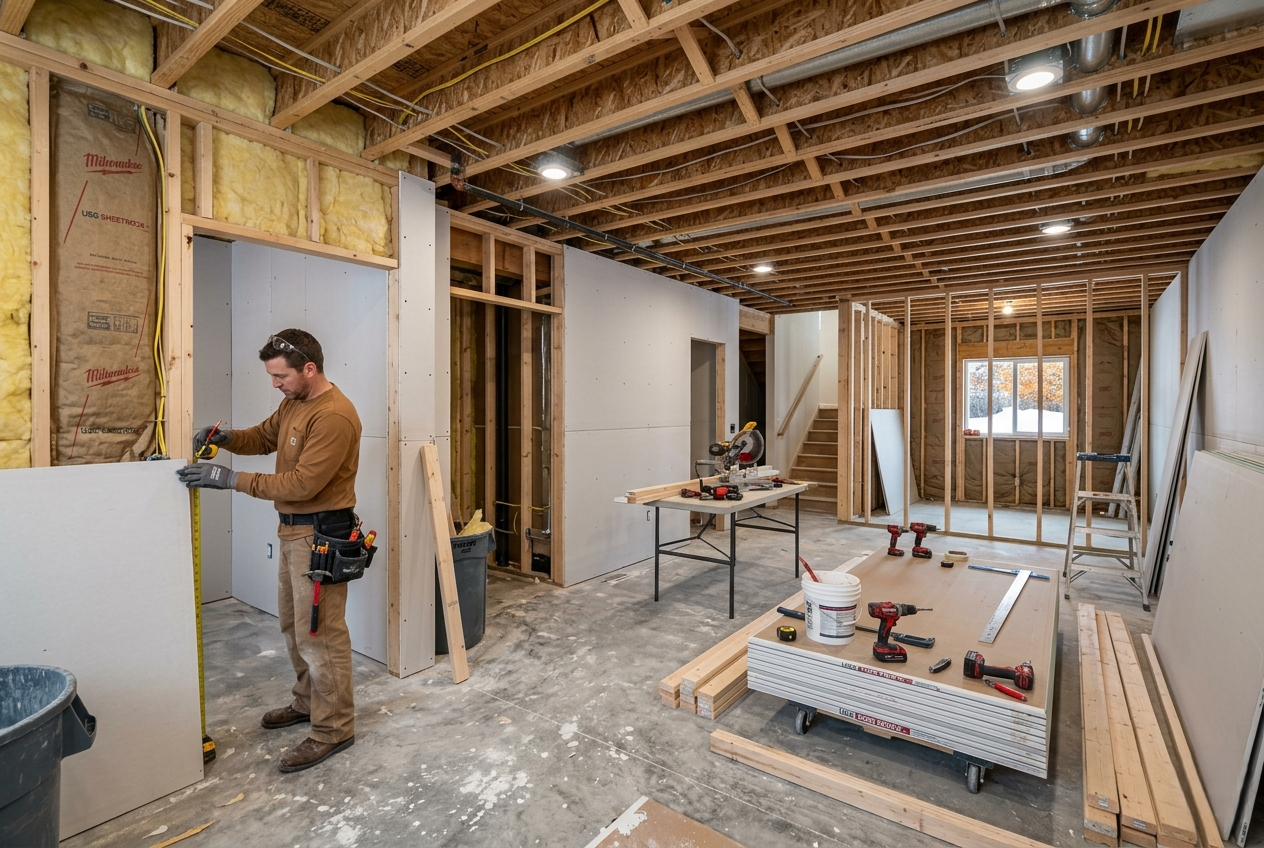
Before starting your basement remodel or finishing project, make sure any moisture problems are properly addressed first. New drywall and flooring installed over a damp foundation will fail, and you will pay for the same work twice.
Fix the Right Problem the First Time
Moisture and water damage need different solutions. A dehumidifier will not stop water leaking through a foundation crack. Sealing a crack will not fix humid summer air. When you treat the wrong problem, you spend money and the real one stays in place.
If you notice a musty smell, water stains, or damp spots that return after rain or snowmelt,
contact Grand Rapids Basement Pros. We will inspect your walls, floors, and drainage, explain what is causing the problem in plain terms, and recommend the right fix. That way, your repair targets the real cause and your basement stays dry.